The room journal
Tufted or smooth booth backs: compare pattern and everyday use
Button tufting and a smooth booth back create different kinds of detail in a restaurant. Tufting breaks a broad upholstered field into a repeated pattern of depressions and highlights. A smooth back lets color, texture, and silhouette carry more of the design. The better choice depends on what the rest of the room already contains.
Compare the finished upholstery form alongside the practical work around it. Seams, folds, buttons, and edges create different surfaces to reach during cleaning and different details to address in a repair. Those differences deserve an actual review, rather than a blanket assumption that one style is always more luxurious or easier to maintain.
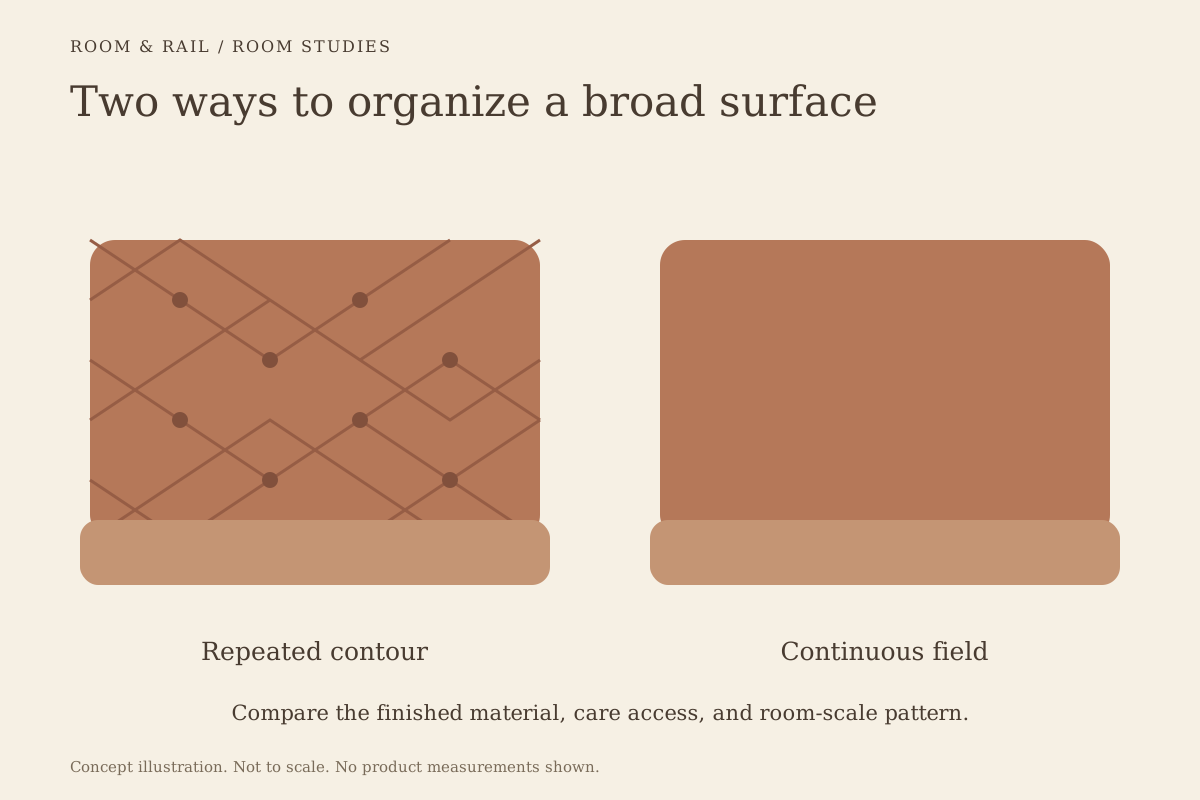
Open diagram at full size (new tab) ↗
Look at the back from the room's normal distance
Up close, a tufted back presents individual details. Across the room, those details become a repeating field of light and shadow. A smooth back can read as a larger uninterrupted color area, especially if the material has little visible pattern.
The booth-back study explains why this broad surface matters. A long run behind several tables can become one of the strongest elements in the interior, so compare it with the wall, lighting, and chair backs rather than judging a single booth in isolation.
The sightline guide is useful for checking both arrival and seated views. A detail that looks balanced in a close product image may be too busy when repeated across an entire wall.
Compare actual models rather than style labels
The button-tufted booth FRU-BT-BT lists padded back and seat construction, fabric or vinyl back upholstery, and several base choices. Those choices can change the overall appearance as much as the button pattern.
The plain-back booth FRU-BT-PL also lists fabric or vinyl back upholstery with a padded vinyl seat. The two products therefore offer a way to compare back treatments without assuming that tufting requires one broad material category and a smooth back another.
Keep the selected shape, height, upholstery, and base visible in the comparison. A tufted booth with legs and a smooth booth with an enclosed base are not differing only in the back pattern.
Use the upholstery texture to control the amount of detail
A pronounced fabric pattern can compete with the geometry of button tufting. A quieter surface may make the tufting itself easier to read. Conversely, a smooth back can give a textured or patterned material more uninterrupted space to show its character.
Review a representative finished detail when the relationship is central to the design. A flat swatch cannot show how the pattern bends into a depression or meets a button. The fabrication can change the way the material looks without changing the material reference.
The upholstery-material guide connects that visual review with exact material identity. A fabric's appearance, care instructions, and technical data should remain attached to the option used on the booth.
Examine the surfaces a cleaning cloth must reach
A smooth field and a tufted field have different contours. Buttons and folds create small changes in direction where a cloth may need more deliberate access. A smooth back can still have seams, piping, and a seat-to-back junction that require attention.
Review the actual finished sample with the approved care method. Observe whether the site's tools can reach the detail without snagging, excessive pressure, or an unapproved cleaning product. Do not assign a universal cleaning-time penalty to tufting without measuring a comparable routine.
The sample evaluation article makes the same distinction between a useful use trial and a formal performance claim. Here, the question is whether the selected detail works with the restaurant's normal care process.
Keep material resistance separate from back style
A button pattern does not establish stain resistance, abrasion performance, or chemical compatibility. Those properties belong to the actual material and construction. A smooth back upholstered in an unsuitable material is not made suitable by its simpler outline.
Likewise, a high abrasion number does not describe the behavior of a button attachment or seam. Ask for the relevant product and material information if a particular performance requirement is part of the purchasing brief.
The upholstered-chair guide provides a related way to read the evidence. Use the technical information to answer a defined question, not to attach a general durability ranking to a style.
Consider what a local repair would look like
A repair to one part of a patterned back may affect the rhythm of the whole surface. A replaced button, recovered section, or altered seam can stand out if the material or detailing no longer matches adjacent areas. A smooth back can also reveal a patch or replacement panel clearly.
The booth repair guide separates the cover from the underlying assembly. Determine how the back is constructed and what kind of approved repair or replacement is available before assuming that any small defect can be handled in place.
Keep the exact upholstery and trim references for later work. If the material ages or is discontinued, a deliberate larger-area change may produce a better visual result than trying to hide a close but imperfect match.
Balance the booth against the table and chairs
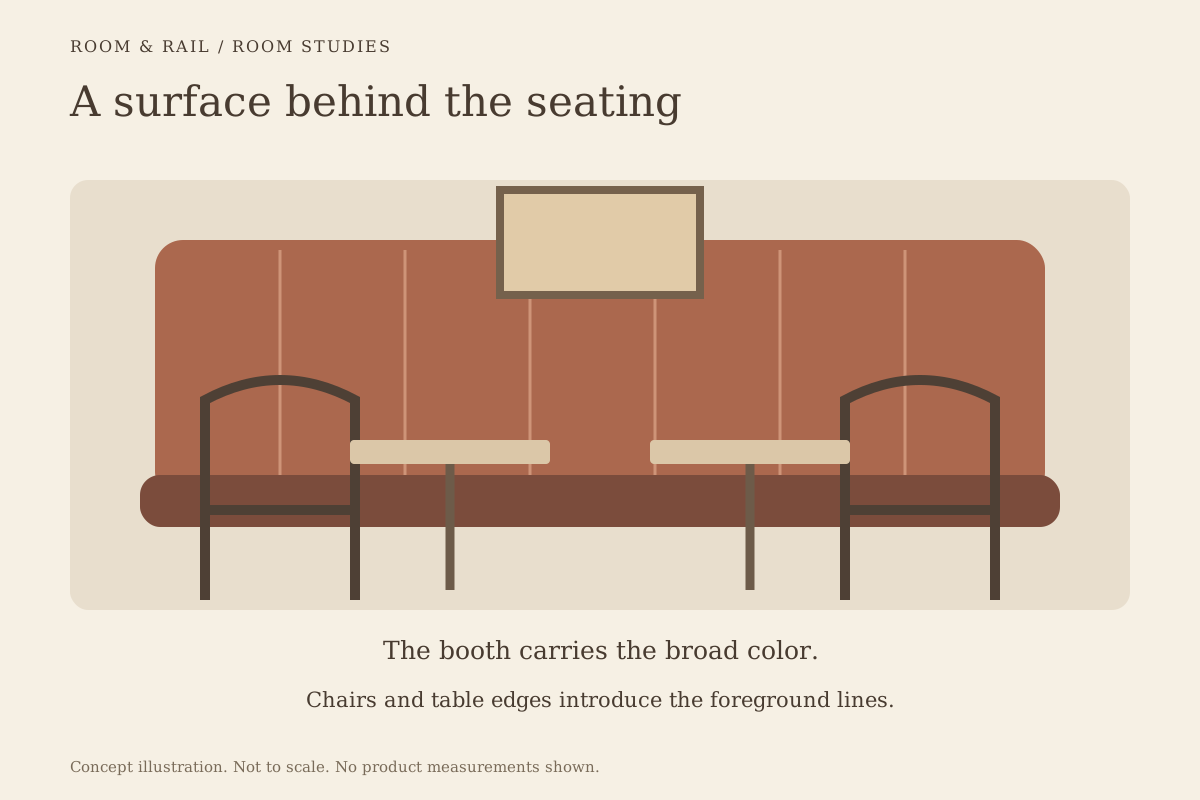
When tufting carries the detail, a quieter table edge and a simpler chair silhouette can give it room. When the booth back is smooth, the chairs or tabletop may carry more of the room's pattern and line.
Compare the actual chairs and table tops in front of the booth. Their overlap changes what guests see. A decorative chair back may obscure part of the tufting and create a denser pattern than either piece suggests alone.
Use the finish board to view the selected elements as one setting. The goal is a clear hierarchy of surfaces, not a rule that every piece must be plain or every piece must be decorative.
Choose the detail the room can support
Tufting works when its pattern contributes to the room and its finished contours suit the intended care and repair process. A smooth back works when a broad material field is the better design choice and its own seams and junctions are well resolved.
Approve the back treatment with the exact upholstery, height, base, and neighboring furniture. The result should feel deliberate at the scale of the room, while remaining understandable as a material and construction choice that the restaurant will use every day.