The room journal
Replacement restaurant chair seats: refresh the surface or replace the chair?
Replacement restaurant chair seats can make sense when the seat needs attention and the rest of the chair has an appropriate service path. They are not automatically the smaller or cheaper answer to every worn chair. The frame's condition, the exact mounting arrangement, and the finished fit need to be understood first.
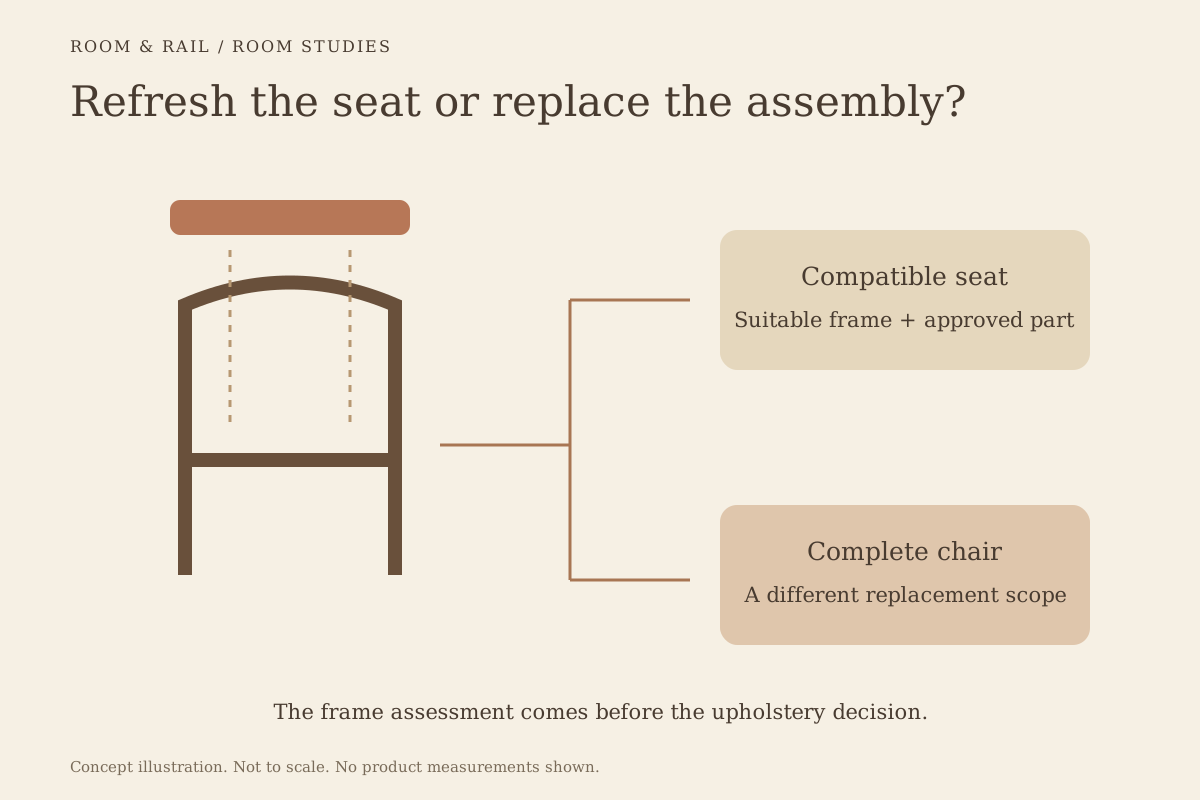
Compare a seat-only project with a new configured chair as two clearly defined scopes. One retains an existing assembly and depends on compatible parts and approved work. The other brings a complete new product but may change the room's appearance and dimensions. A useful decision explains those differences before comparing totals.
Open diagram at full size (new tab) ↗
Establish whether the chair is a candidate for a seat project
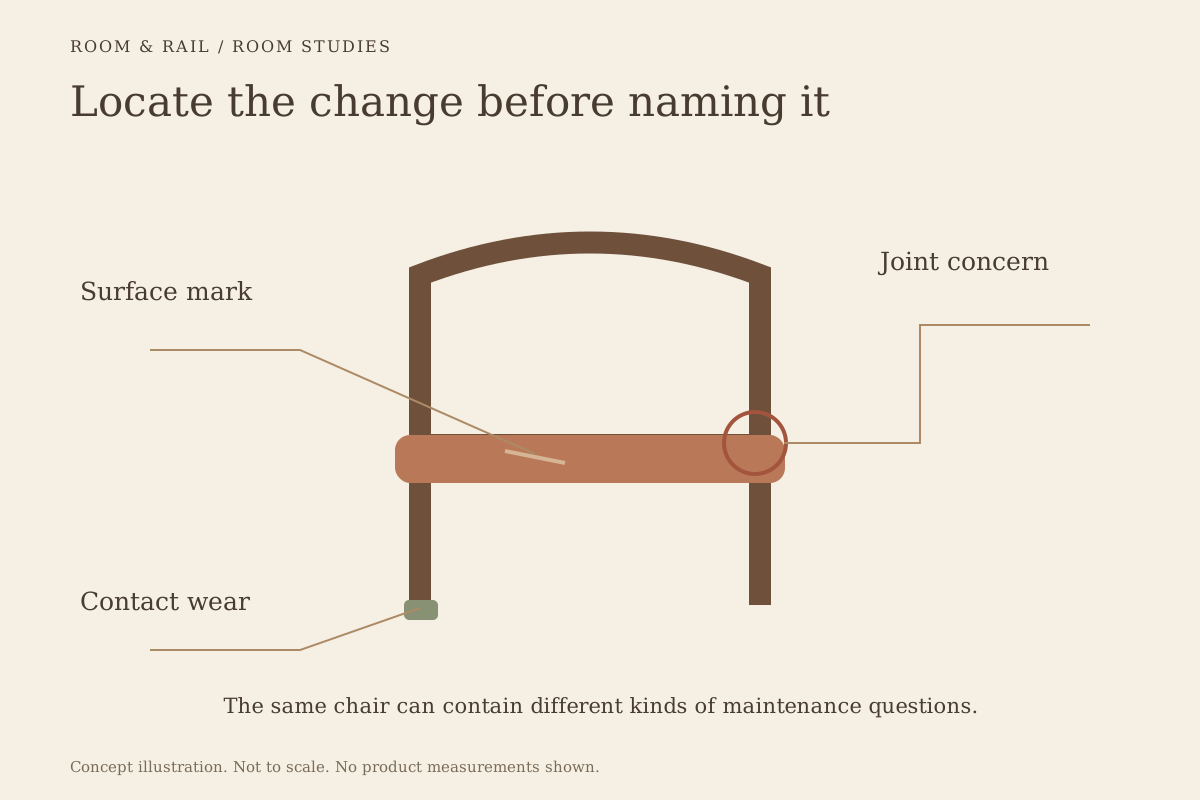
Begin with a condition assessment under the applicable manufacturer or qualified service guidance. A worn surface and a loose or damaged frame raise different questions. Do not fit a new seat over an unresolved structural concern and treat the result as a refurbished chair ready for use.
The chair wear guide helps identify the affected component and the information to retain. Keep the model, location, and observed condition specific. The seat project should respond to an assessed need, not simply to the age of the original purchase.
If the frame is suitable for the proposed work, request the approved seat or service route. A removable-looking component is not proof that the owner should replace it without instructions. The intended assembly and the person performing the work must be clear.
Identify the seat through the original model
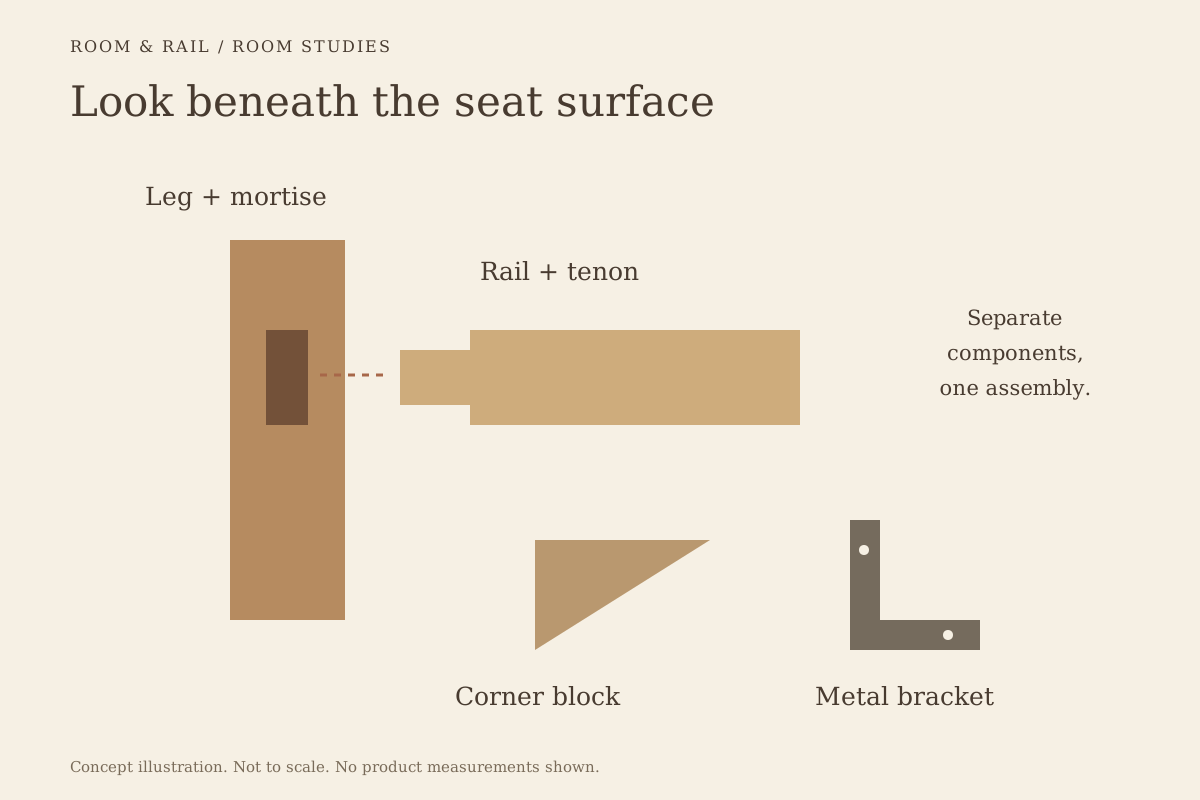
Locate the original product and configuration record. Retain the model number, photographs of the seat and underside, and the measurements the supplier requests. A top-view photograph alone may conceal the mounting pattern or a shaped support beneath the upholstery.
Commercial seating manufacturer Regal identifies model numbers, photographs, and measurements as relevant to its replacement-parts process because dimensions, mounting patterns, and hardware vary. That is a useful example of the identification problem, not evidence that its parts fit products from another source.
The buying guide explains why the exact configuration belongs in the retained record. If the original order is incomplete, resolve that identification before purchasing a part that merely looks close. Approximate visual matching is a weak basis for mechanical compatibility.
Distinguish new-product options from replacement parts
The FRU-110 chair offers wood, padded vinyl, and padded fabric seat choices when configured as a product. The existence of those controls does not establish that every option can be supplied as a later replacement for every existing version.
Likewise, the FRU-US-225 chair offers several seat forms, including pullover padded choices. A different seat form may change the appearance and other details of the finished chair. Ask which replacement is approved for the actual frame and original assembly.
Use the chair selection guide to compare the complete new-product alternative. Do not assume that replacing a seat gives an older chair the same configuration or documentation as a newly supplied model with a similar name.
Check what the replacement changes at the table
Seat thickness, shape, and the way it sits on the frame can affect the finished seating position. Obtain the dimensions of the approved replacement and compare them with the existing arrangement. Do not treat a new upholstery color as the only change if the seat construction differs too.
The comfort-review guide provides a method for ordinary observation after the appropriate assembly and checks are complete. Review the actual table relationship, including the underside and supports. A successful visual match does not establish equivalent seated fit.
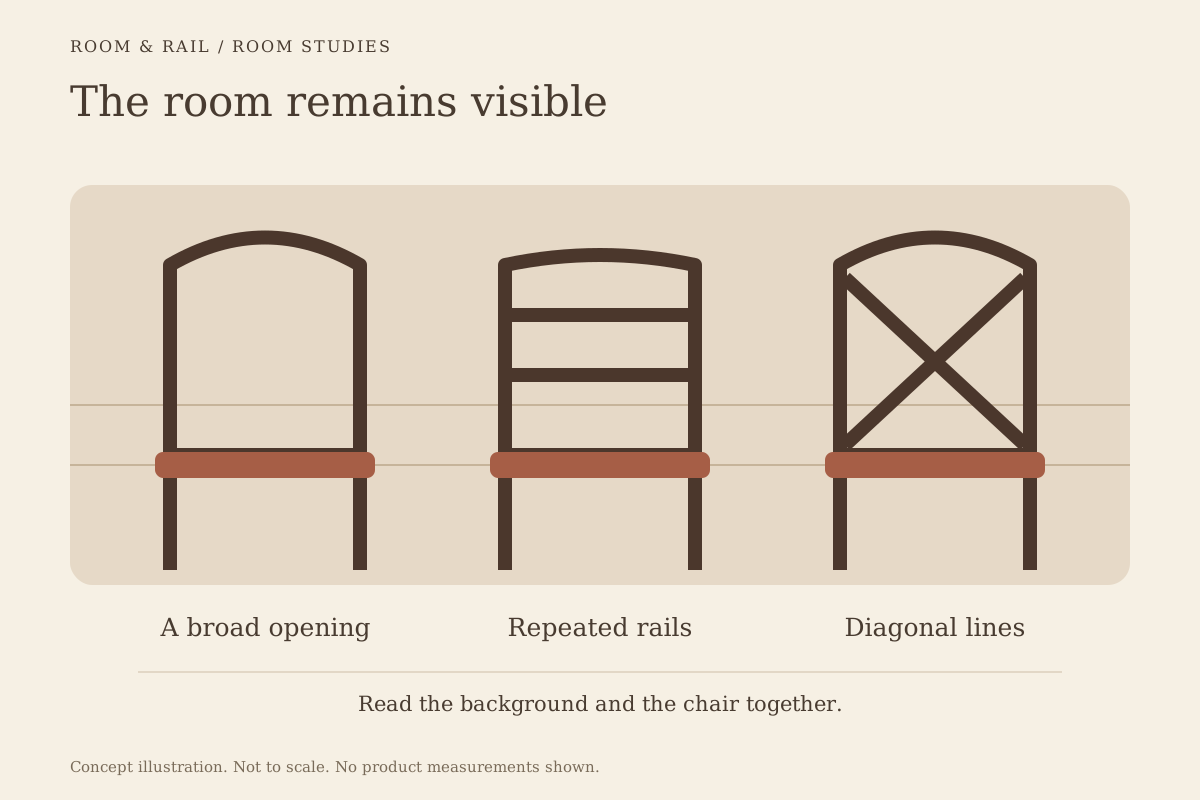
For armchairs or bucket forms, the surrounding structure adds another reason to check the exact assembly. The replacement must be reviewed within that geometry. A similar overall seat width does not answer every attachment or usable-space question.
Compare the full scope of the work
List the approved parts, required labor, transport or collection arrangements, and any confirmed downtime involved in the seat project. Compare that scope with the configured new-chair purchase and its confirmed charges. Leave unknown amounts visibly unresolved rather than filling them with an arbitrary allowance.
The ownership comparison separates known costs from future assumptions. Do not invent additional years of use to make the seat project win. A compatible replacement and a serviceable frame still do not provide a universal lifespan forecast.
Consider how the work will be phased if furniture must leave the room. Identify the actual affected quantities and the alternative seating plan through the room schedule. That planning does not establish that the business can operate unchanged during the work.
Review material and color continuity
Obtain the exact upholstery or seat-finish reference proposed for the replacement. An old finish name may not establish a current visual match, and remaining seats may have changed in appearance through use. Compare the new reference with the existing furniture under relevant room conditions.
The physical sample guide helps record what was compared. If a close match is not available, consider whether a clearly grouped change would be more coherent than scattered near-matches. The design decision should be explicit rather than an accidental result of parts availability.
Review upholstery care for the new material. A replacement surface can require different instructions from the original. Give the operating team the current guidance instead of assuming the established cleaning routine still applies.
Retain the approved assembly information
Keep the supplied part reference and installation instructions with the chair record. Do not improvise fasteners, drill new mounting holes, or modify a frame to accept a close-looking seat without the appropriate approval. Compatibility should be established before the work begins.
Follow the required checks before returning the chair to normal use. The capacity discussion explains why original claims should not be casually transferred to an altered assembly. Obtain confirmation where the approved change affects the relevant documentation.
Choose the route that addresses the actual condition
A seat-only project is useful when it has a sound basis: an assessed frame, an identified compatible part, an approved work process, and a finished result that suits the room. A new chair may be the clearer choice when those conditions cannot be established or when the whole specification needs to change.
Record the decision and update the saved product references. The value of the review is its precision. It makes clear what is being retained, what is changing, and why the chosen route answers the actual furniture problem rather than simply covering its most visible surface.