The room journal
Choose restaurant chairs by their place in the room
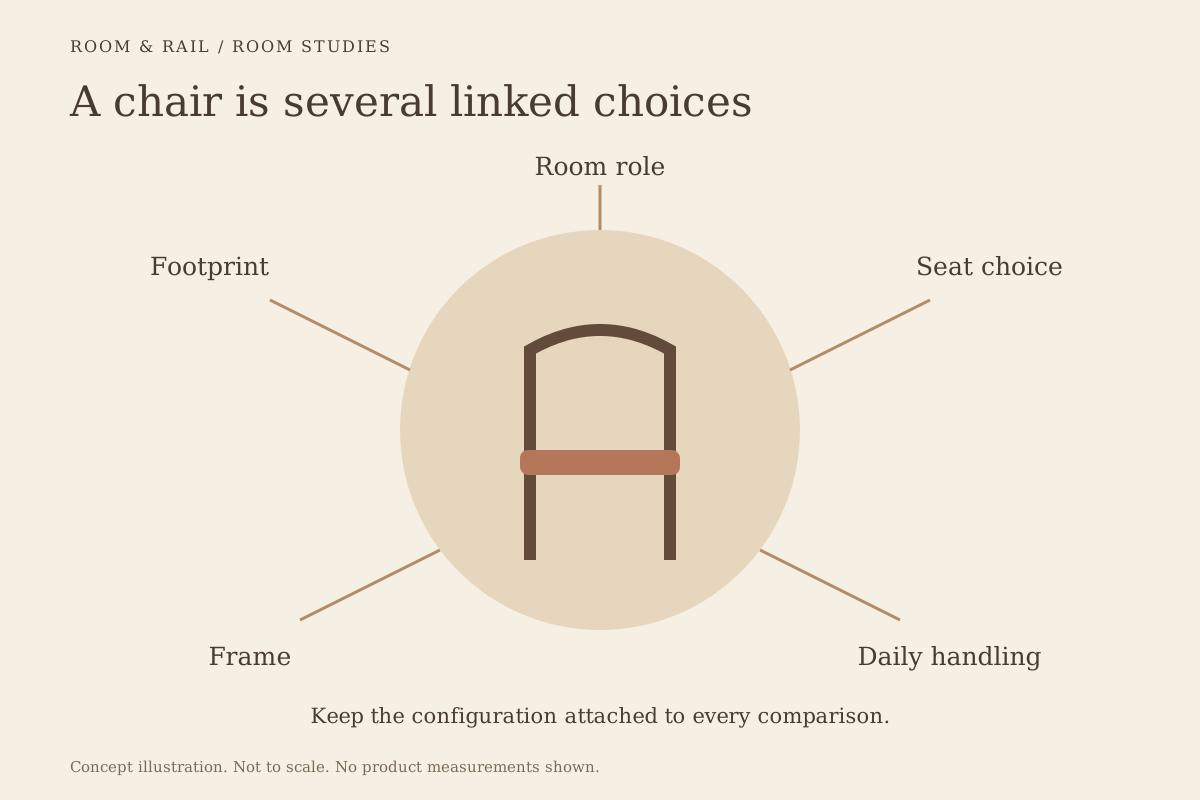
Choosing restaurant chairs starts with the room you intend to run. A chair for a compact lunch table faces a different set of questions from one beside a broad upholstered booth. The appearance matters, but so do the actual footprint, seat construction, handling, and available finish combinations.
Build a short comparison around those questions before filling a board with alternatives. You will make a clearer decision by understanding several real models than by comparing dozens of isolated pictures. Keep the visual idea attached to the product information throughout the selection.
Open diagram at full size (new tab) ↗
Define the chair's place in the room
Name the seating position and the service it supports. Record the table or counter involved, the intended indoor or outdoor setting, and any movement that happens during cleaning or room changes. These details help explain why one chair is a stronger candidate than another.
Use the restaurant chair collection to build the first shortlist. Review the venue brief if the room serves several purposes. A cafe corner used for a quick drink and a dining area set for a full meal may need different comparisons within the same project.
Do not begin by maximizing the number of chairs on a drawing. The furniture must be checked in the measured layout, including its use and movement. The layout-to-schedule guide explains how the final selections become a count without treating a furniture sketch as an occupancy approval.
Compare actual footprints before the finishes
Product dimensions reveal differences that can disappear in similarly sized photographs. The FRU-110 ladder-back chair lists an overall width of 17 inches, depth of 20 inches, and height of 32 inches. The FRU-US-225 wood chair lists 17 inches wide, 17 inches deep, and 34 inches high.
Those records describe overall furniture dimensions. They do not establish usable seat width, occupied clearance, or the distance needed behind the chair. Ask for any missing measurement that affects the table pairing or room plan rather than filling the gap from the image.
A deeper model may still be appropriate for the room, while a smaller listed footprint does not make another universally better. Compare the chair in its intended position with the table support, neighboring seats, and circulation route. The dimensions narrow the questions; they do not answer every one.
For an armchair, distinguish the outside width from the space between the arms and check the arm's relationship to the table underside. A side chair removes that particular obstruction but still needs its seat and back reviewed. Keep each measurement attached to the model that supplied it.
Separate frame choice from seat choice
The frame determines part of the chair's outline and construction, while the seat introduces a different surface and set of options. Browse wood frames and metal frames as model-level choices rather than promises about every product in either category.
FRU-110, for example, offers wood, padded vinyl, and padded fabric seat selections within its metal-frame model. FRU-US-225 offers several seat forms, including pullover padded choices. The comparison can therefore change substantially without changing the model number.
Read the upholstery selection guide when the seat material affects the decision. Obtain the care and material information for the exact offered option. A general category label does not establish cleaning compatibility, replacement availability, or the feel of the finished seat.
Test the chair as part of a table setting
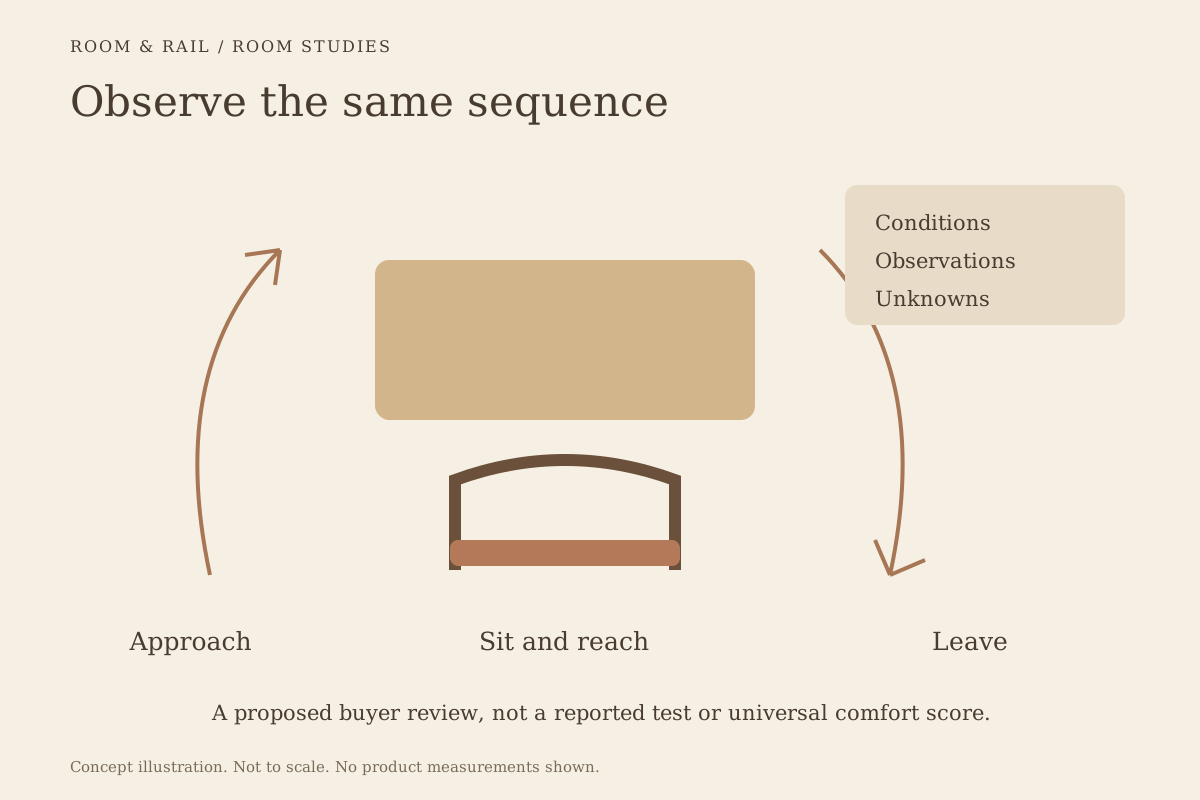
A useful trial includes the intended table height and support arrangement. Have reviewers approach the seat, sit normally, reach toward a representative place setting, and leave the position. Note specific observations rather than asking only whether the chair feels comfortable.
The chair comfort review provides a repeatable method. It is an evaluation process, not a claim that any chair has already passed a test. Where no sample is available, identify the unanswered fit questions and avoid treating a photograph as a substitute.
Keep a load rating separate from comfort. A listed rating describes a different issue from seat shape, back contact, or access to the table. If a rating or certification matters to the project, request the relevant model-specific documentation and its scope.
Look at handling and later ownership
The daily work around the furniture deserves a place in the comparison. Ask who moves the chairs, where they go during cleaning, and whether the model is documented as stackable. Do not improvise a stacking arrangement simply because two chairs appear to nest.
The current records list FRU-110 at 18 pounds and FRU-US-225 at 22 pounds. These weights can inform a handling discussion, but they do not predict whether a particular person will find either chair easy to move. A supervised trial in the actual task provides more useful information.
Read the model-level ownership comparison before using price as the deciding factor. Separate known purchase information from unanswered questions about care, parts, and replacement. Neither frame material nor initial price establishes a universal service life.
Give the room a readable mix
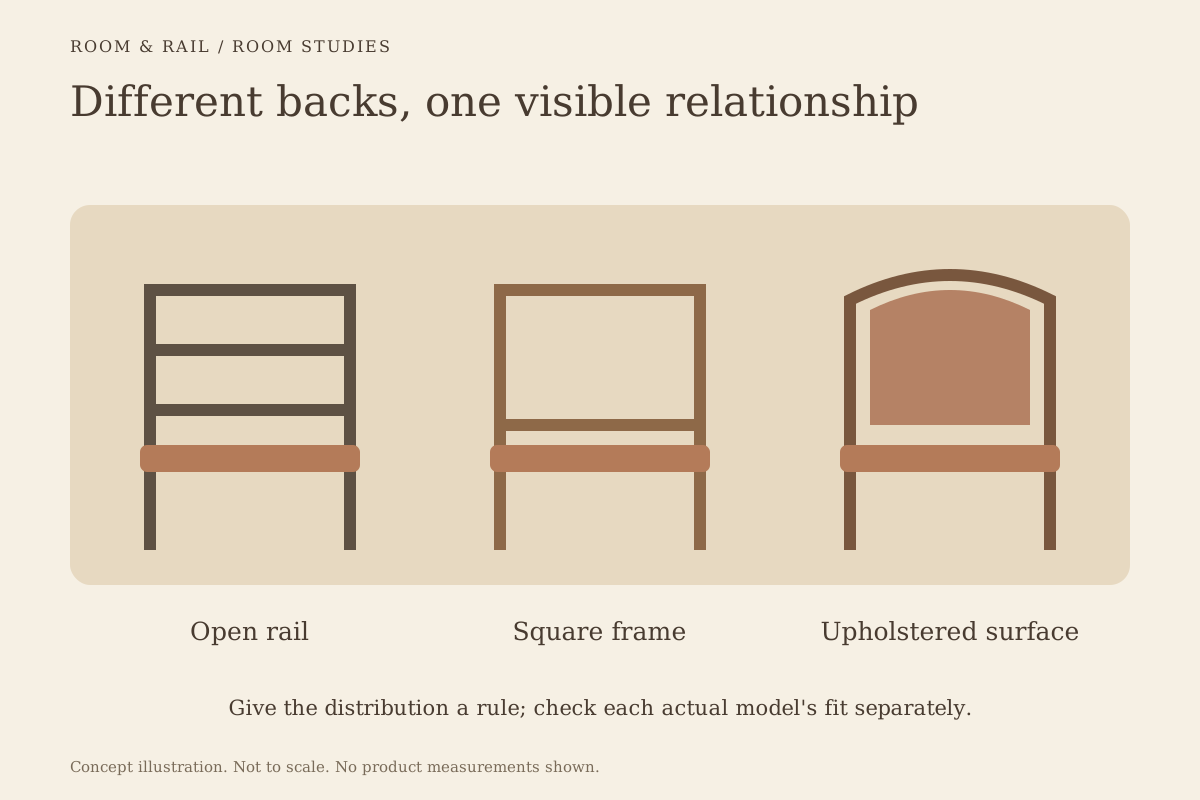
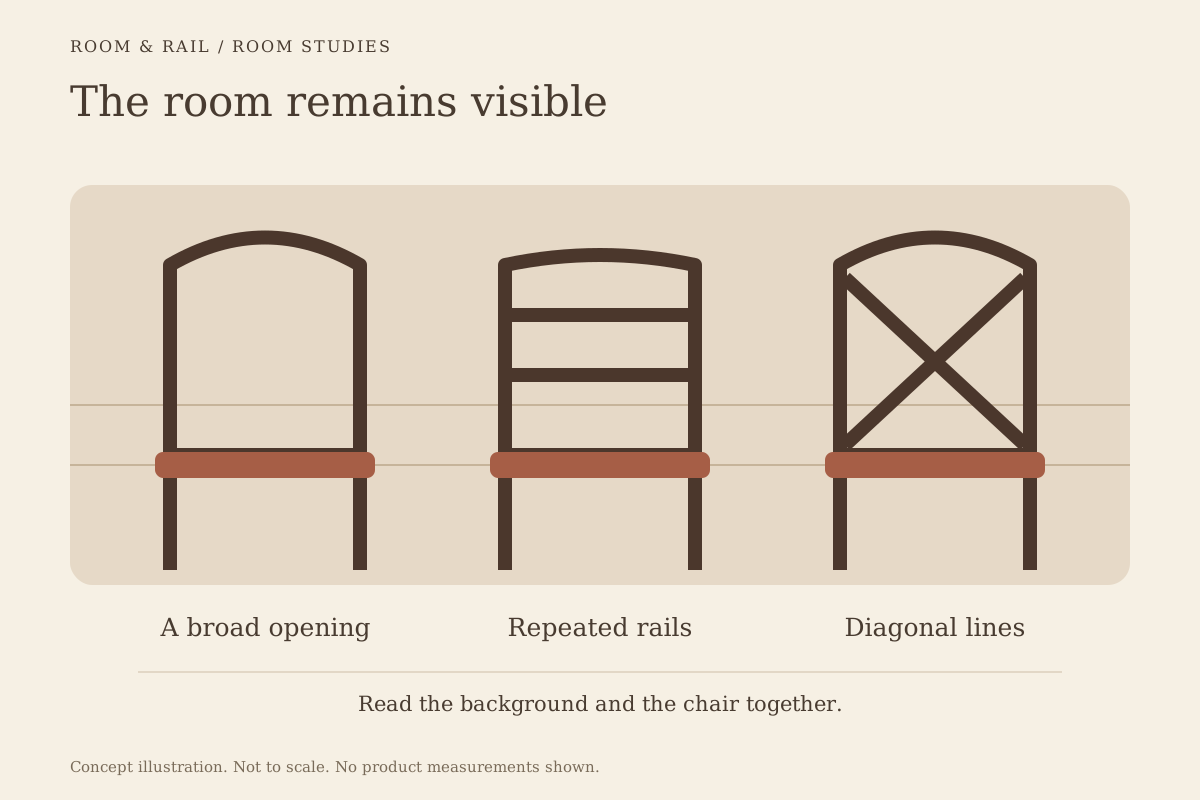
Once the practical shortlist is clear, compare the chair against the fixed floor, wall, and table surfaces. Decide what it should repeat and what it should change. An open frame, an upholstered back, and a broad panel occupy different amounts of the view.
The guide to mixed chair styles shows how different models can share a deliberate design thread. If the room uses one model throughout, review its repetition across several tables. A detail that looks restrained once can become a strong pattern when repeated.
Finish samples should remain attached to their actual options. Similar names across models do not prove an identical finish. Keep alternatives separate until the team has accepted the intended relationship under the relevant room conditions.
Close the shortlist with explicit decisions
For each remaining chair, identify the chosen frame, seat form, finish, and quantity. List missing dimensions or material answers beside the affected model. This is more useful than a general note saying details to follow, because the next review can address a specific unresolved question.
Return to the chair's original role before accepting the final selection. It should suit the intended position, contribute to the room's composition, and carry enough verified information to be ordered clearly. A smaller, well-understood shortlist leaves the project in a stronger position than a larger collection of appealing but incomplete references.