The room journal
Mixed restaurant chair styles with a clear rule for the room
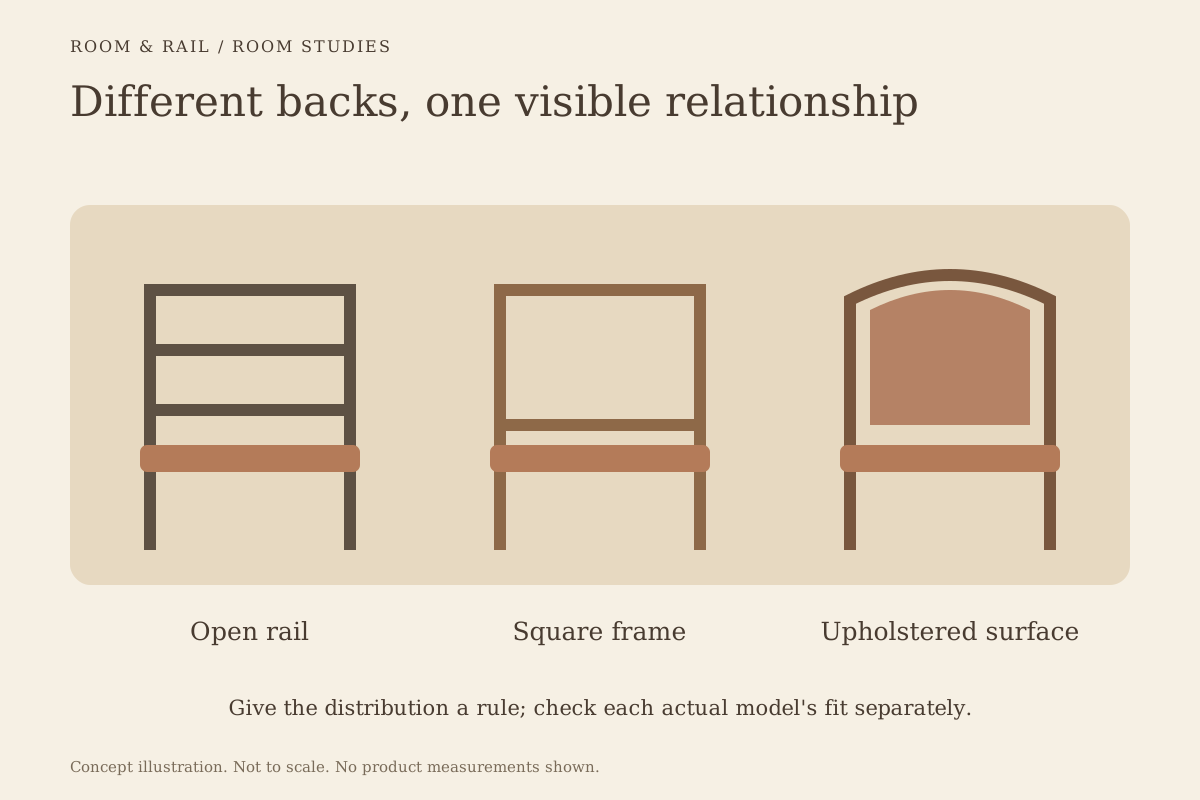
Mixed restaurant chair styles can give a room a clear rhythm when the differences have a reason. A broad upholstered back beside an open frame changes the amount of surface in the view. Two different frames with a related seat color can connect separate zones without making them identical.
Choose the rule for the mix before adding more models. The rule might follow room position, table type, or a shared design detail. It should be simple enough to explain to another reviewer and specific enough to guide a replacement if one model changes later.
Open diagram at full size (new tab) ↗
Decide where the difference belongs
Begin with the room rather than a collection of favorite chairs. Mark which seating positions should feel connected and which can carry another character. A wall-side group and a central dining group may have different visual backgrounds even when they share a table finish.
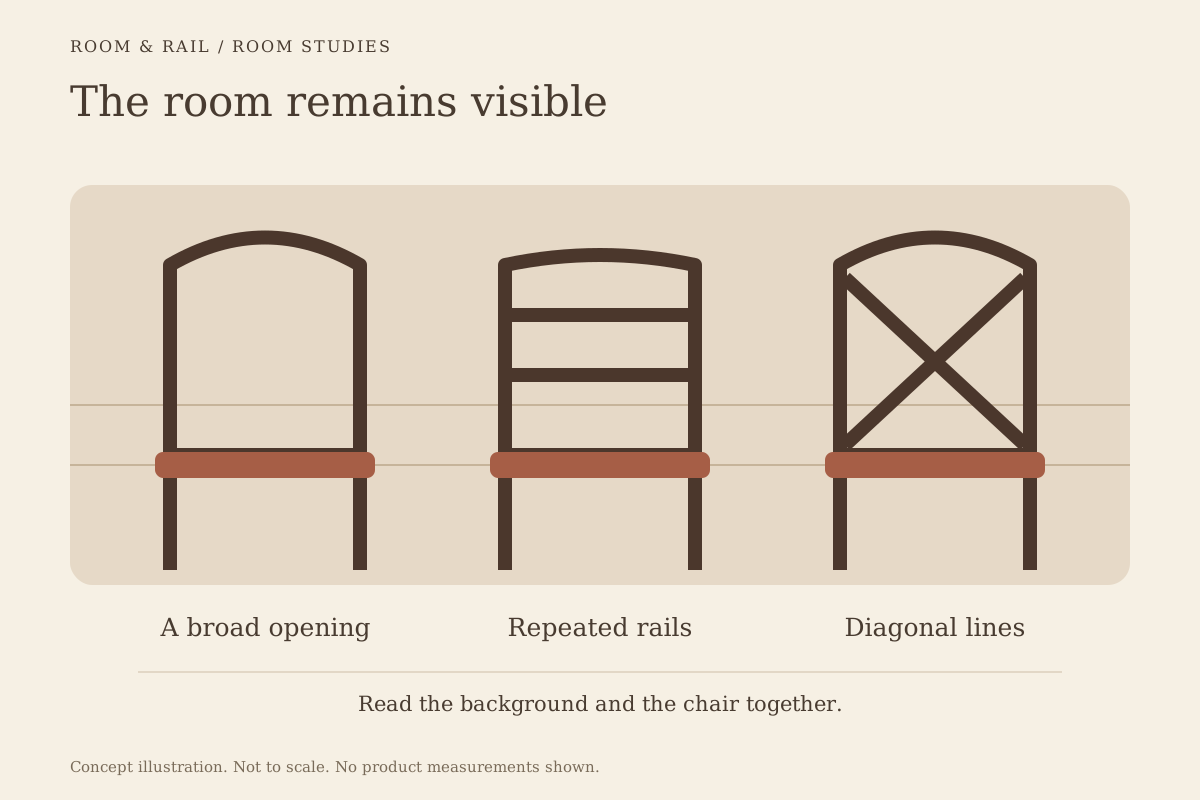
Use the sightline guide to identify the views where the mix will be seen together. A difference that looks clear on a board may be hidden behind the tables, while another contrast becomes much stronger at the entrance.
Keep the measured layout in the review. Different styles may also have different footprints and usable dimensions. A visual rule should not conceal the need to check each model in its own position.
Try a frame relationship before a full color match
The FRU-110 ladder-back chair has a metal frame and offers Black, Brown, and Silver frame choices. The FRU-US-225 wood chair has a square-back style and several wood-finish options. Their different frame types can be compared through tone, line, or contrast.
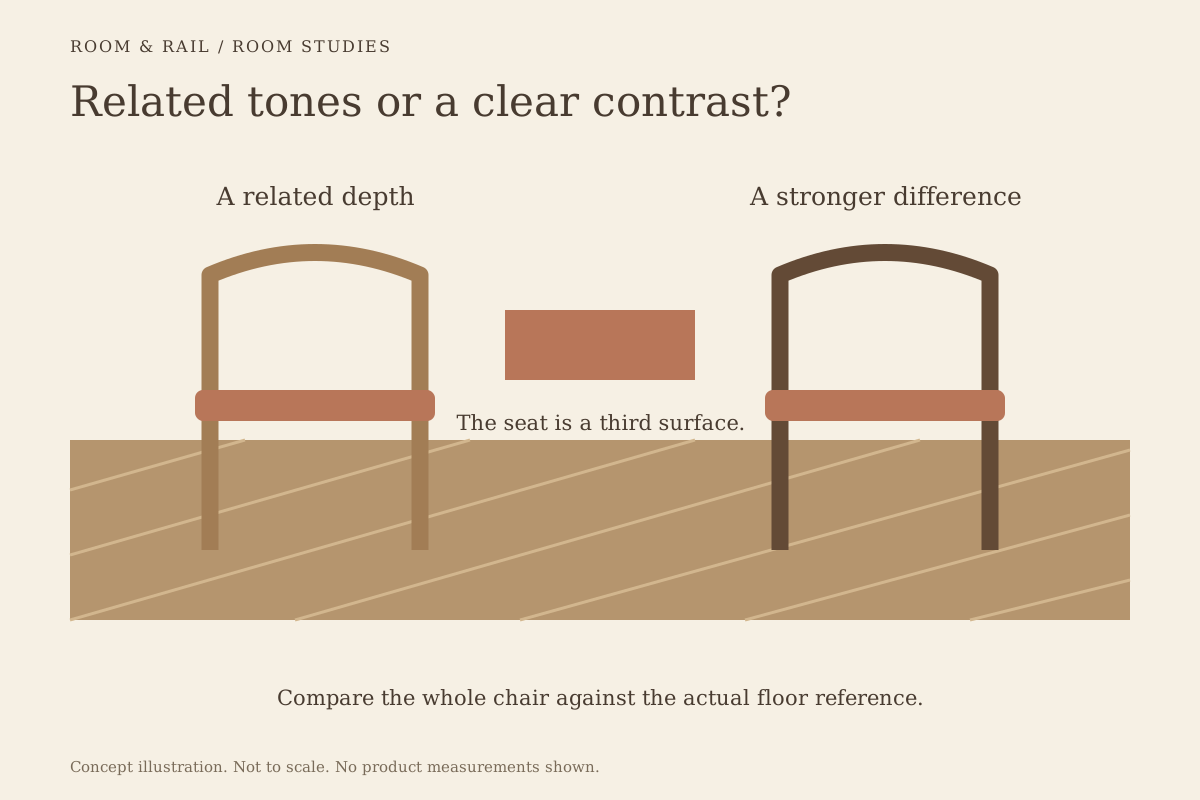
A possible scheme could place a dark metal frame beside a deeper wood finish, with seat colors reviewed as the connecting element. That is a design proposal to test, not a claim that the catalog's similarly named finishes are identical. Physical references are needed if a close match is important.
Read the materials guidance before describing the combination. Keep each frame's actual construction and selected option name. The visual shorthand used for the room should not replace the product identity on the order.
Use upholstery to change the amount of surface
The FRU-2152 chair introduces a padded back within a wood-frame model. Its back and seat have separate material controls. Beside an open frame, that broader upholstered surface can become the more noticeable part of the group.
Decide whether the upholstered chair should lead or sit quietly in the scheme. The guide to upholstery beside bold surfaces helps make that choice. A plain material can still have a strong presence when it covers a larger area.
Do not assume that a fabric offered for one model is available on another. Compare the actual options on both product pages and retain separate labels. The intended connection may be a related color family rather than an exact material match.
Check dimensions before assigning positions
The models above do not share the same overall footprint. FRU-110 lists 17 inches wide by 20 inches deep, FRU-US-225 lists 17 by 17 inches, and FRU-2152 lists 19 by 22 inches. These are product dimensions, not the occupied clearance needed around the arrangement.
Review each selected chair with the intended table and its support. If a larger upholstered model is proposed at particular positions, check those positions directly. Do not use the smaller model's footprint for the whole plan because the chairs share a color palette.
The chair selection guide and comfort-review method provide the practical checks. A coordinated mix still needs model-specific fit and use review. Appearance does not make the pieces interchangeable.
Make the distribution intentional
Assign the different models by a clear pattern in the actual plan. You might use one chair form in a quieter side area and another in the central room. Alternatively, the difference could follow table shape, provided the intended pairing has been checked.
Avoid an arbitrary alternating pattern unless the repetition is part of the design. Too many model changes can make the furniture schedule harder to read without adding a useful distinction to the room. Review the mix from a distance, where individual details become a broader pattern.
Keep the configuration and quantity for each model on separate lines in the finish board. If one model appears in two finishes, those versions need separate records too. A note saying mixed chairs does not identify the intended distribution.
Connect the mix to tables and booths
The furniture around the chairs can carry the shared thread. A repeated table surface may connect several chair forms, while a continuous booth color gives the room another visual reference. The chairs do not need to repeat every detail themselves.
The guide to booth backs as room surfaces explains how a larger upholstered area can organize the view. Compare the chair mix against that background. Several distinct backs may read more clearly beside a quiet booth than beside another strong pattern.
Check the table edges and supports as well. A mix of chairs, several top finishes, and several base forms can create many separate decisions in a small area. Decide which elements should remain consistent so the differences have a readable setting.
Plan for a later replacement without freezing the room
Record the features that make each chair belong. A note might identify an open dark frame in the central area or a warm upholstered back along the wall. This allows a future alternative to be assessed against the design intention instead of searching only for a similar photograph.
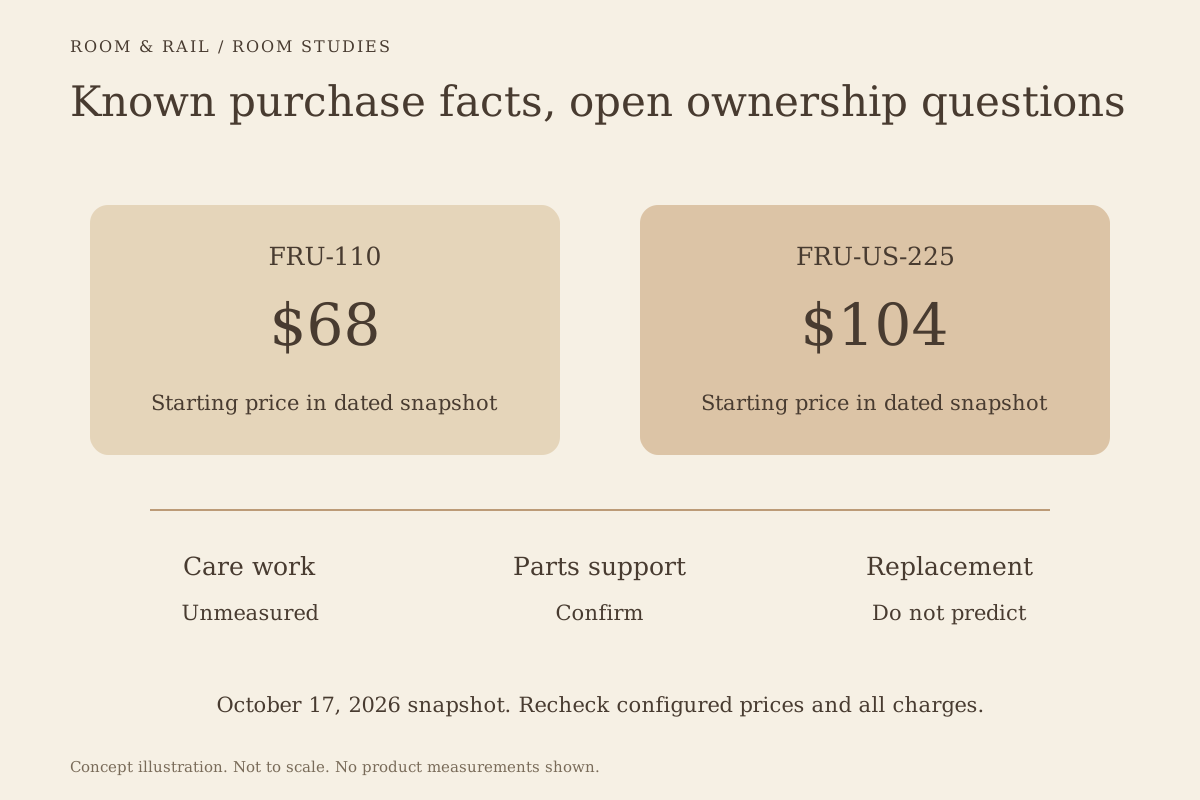
Use the ownership comparison to consider documentation, care, and replacement questions for each model. A mixed scheme can require several sets of instructions and parts references. Keep those differences visible rather than treating the whole room as one product family.
Let the mix remain easy to explain
Review the final room and describe the relationship in a short sentence. If the explanation needs a separate justification for every chair, simplify the selection or group the differences more clearly. A strong mix can contain variety while leaving the room understandable at first glance.
Save the accepted models, finishes, and distribution together. The result should feel intentional to a guest and precise to the person preparing the order. Those two qualities support each other when the design rule is clear enough to survive the next revision.