The room journal
Fixed or swivel bar stools: follow the way guests move
Choosing fixed or swivel restaurant bar stools is a decision about how the guest moves in relation to the counter. A fixed seat stays aligned with its frame. A swivel seat turns relative to the supporting structure. Neither description tells you whether the entire stool is freestanding or attached to the floor.
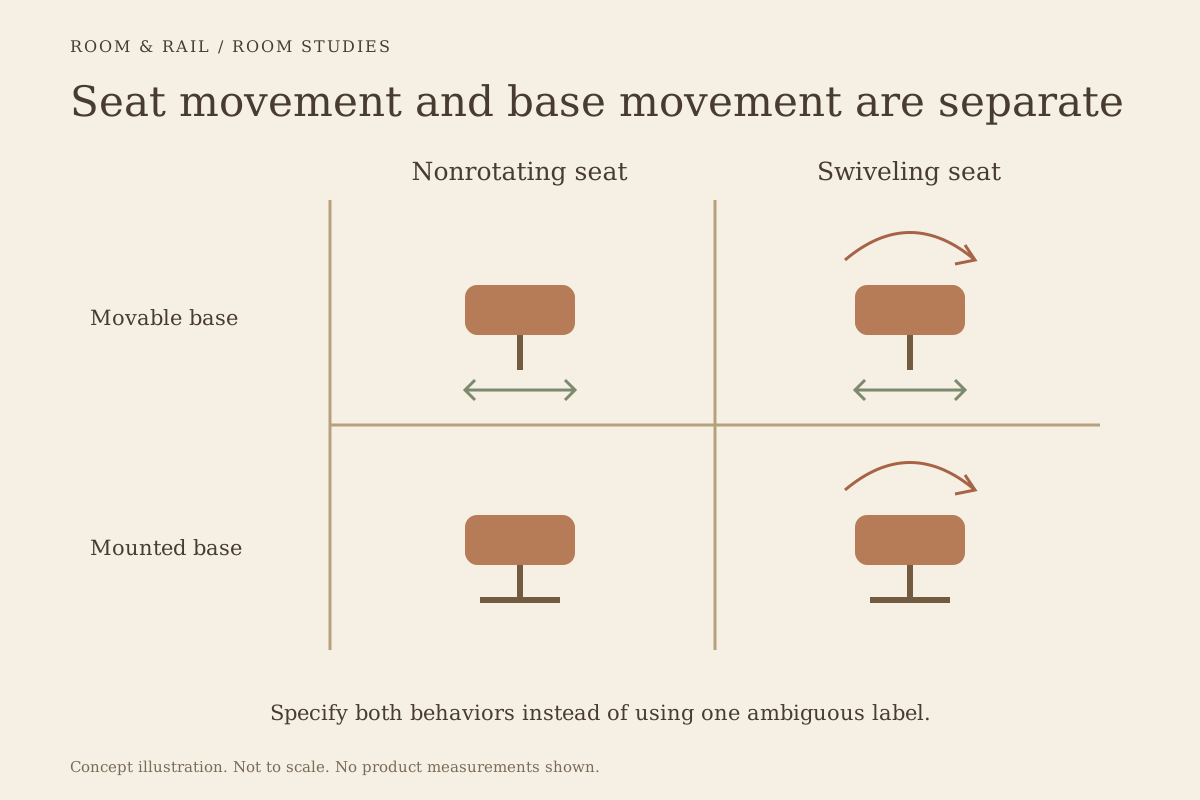
Keep those two questions separate from the beginning. A floor-mounted stool can still have a swivel seat, while a freestanding stool can have a nonrotating seat. The useful comparison follows the guest's approach, seated activity, and departure within the actual room rather than treating swivel as a style category.
Open diagram at full size (new tab) ↗
Draw two decisions instead of one
The first decision is whether the seat rotates. The second is whether the base can be moved. Together they describe the basic movement available at a seating position. Confusing them can lead to a drawing that assumes the guest can shift a stool whose base is permanently fixed.
The FRU-BSB-134 stool illustrates the distinction: its record lists both Swivel Seat and Bolt Down as yes. The FRU-10427-BS-SW stool also lists a swivel seat, but that fact alone does not describe a floor-mounted installation.
For a documented movement example, the FRU-777-BS backless stool has a published 360-degree swivel description. That full turn describes the mechanism, not a promise that every bar position has room for the guest to use the entire range. The occupied layout still needs to accommodate the intended movement.
Use the bolt-down planning guide for the base decision. Use the mechanism guide for rotation range and return behavior. Those articles answer different questions, even when they concern the same selected stool.
Follow the guest into the seat
With a nonrotating freestanding seat, a person may reposition the whole stool before sitting. With a swivel, the person may turn the seat while the base remains where it was placed. The available approach, stool shape, and guest preference affect which movement feels workable.
Observe a sample in the actual position proposed for it. Include the counter edge, the stool beside it, and the path behind. A showroom demonstration in open space leaves out the very objects that determine whether turning or moving the stool is useful.
The arm-clearance guide adds another variable. Arms can restrict the side opening or project during a turn. A swivel may change the approach, but it does not automatically solve an opening that is too narrow for a particular guest.
Compare three ordinary service situations
At a straight counter used mainly for forward-facing dining, a nonrotating seat may provide the movement the restaurant needs through simple repositioning. That is a planning possibility, not a claim that fixed seats are always more comfortable or appropriate for meals. The sample review still needs to include getting in and out.
At a bar where people frequently turn toward companions or screens, seat rotation may be useful. The sports-bar seating article considers those changing directions. The layout must also allow the back and arms to move without striking neighboring people or furniture.
At an end position beside a wall, either type can reveal a constraint. A fixed seat may be awkward to approach; a swivel back may reach the wall during its turn. The correct response may be another stool form or a different position rather than choosing one mechanism as a universal cure.
Review the moving outline, not only the parked stool
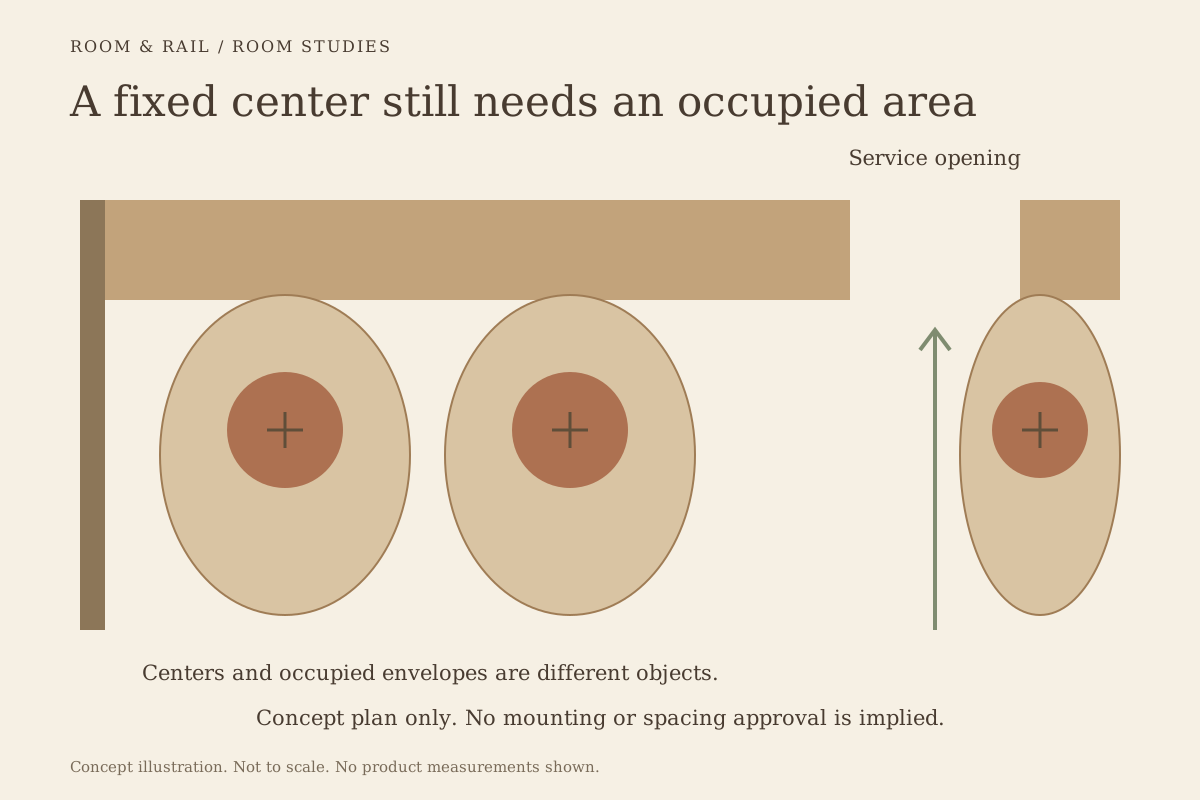
A stool is often shown facing squarely toward the counter. That parked outline does not describe the path taken by a rotating back or arm. Obtain the relevant dimensions or review an approved sample through its intended movement before approving the spacing.
Use the layout schedule guide when documenting both the parked and occupied arrangement in your own plan. A nonrotating stool may also move outward when a guest sits down or stands up. The comparison should include that translation rather than treating a fixed seat as equivalent to no movement at all.
Leave circulation and required clearances to the responsible project review. A furniture diagram can identify where movement occurs, but it cannot establish a permitted route by itself. The layout should accommodate the intended activity without relying on guests to avoid an unmarked collision zone.
Keep the footrest in the movement study
If the seat swivels while the footrest remains fixed, the relationship between the guest's feet and the support can change during a turn. If another assembly moves differently, the experience changes again. Identify the actual product construction instead of assuming every swivel stool behaves alike.
The footrest article considers support shape and position. During a sample review, ask the person to describe how the feet meet the support when facing the counter and when turning normally. This is an observation method, not a claim that any particular posture suits everyone.
A nonrotating seat also needs that review. Its foot support may be well placed or awkwardly positioned independent of the absence of a swivel. Selecting fewer moving parts does not remove the need to compare seat depth, footrest distance, and table reach.
Decide how the empty row should look
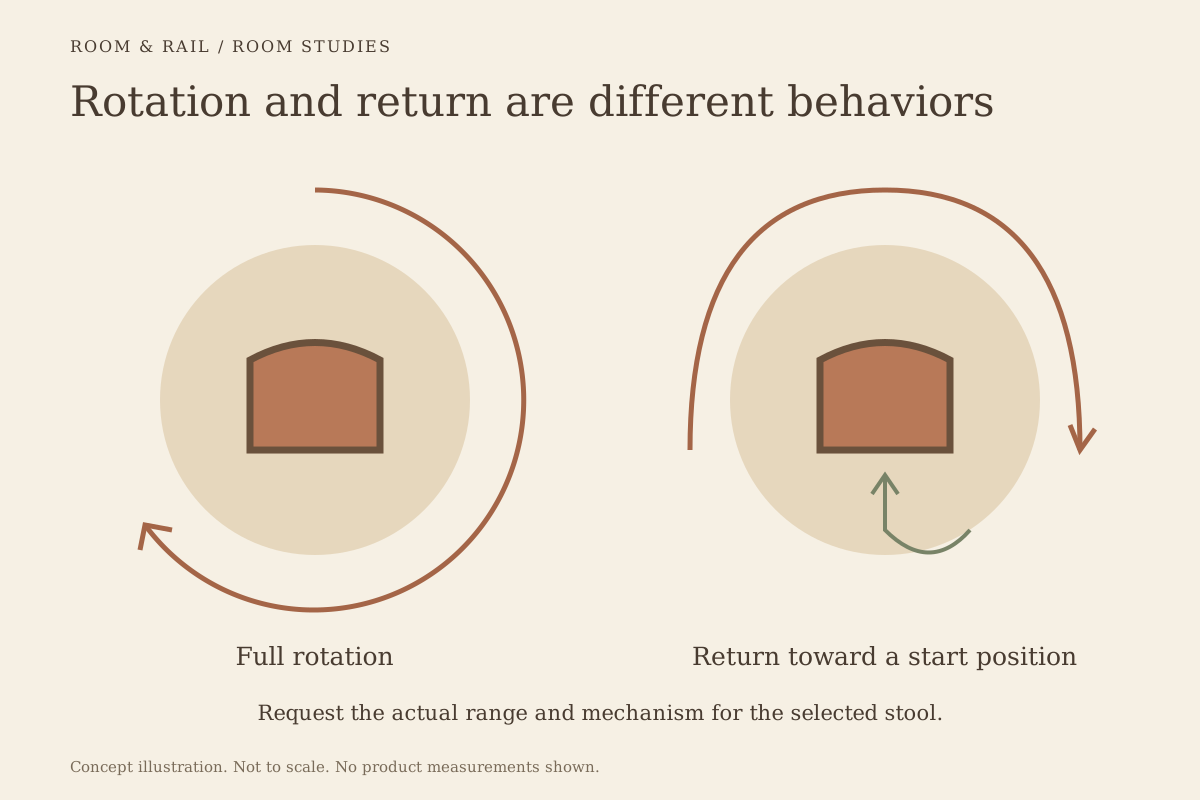
Swiveling seats can finish at different orientations after use, depending on their mechanism. A return feature may restore a preferred direction, while a freely rotating version may remain where the guest left it. Confirm the actual behavior before relying on it to maintain a repeated row of backs.
The sightline guide helps assess the empty and occupied bar from the entrance. A consistent forward-facing outline can reinforce the counter's rhythm, while varied angles create a different view. Neither result is inherently wrong, but it should be considered with the room's other patterns.
The selected finish also needs to work from several sides. A rotating seat can expose a rear surface that is less visible in a fixed orientation. The finish-sample review should therefore include the complete seat and back, not only a front-facing material swatch.
Compare maintenance scope without predicting failure
A swivel introduces a mechanism with its own attachment and service requirements. That is a concrete difference from a nonrotating assembly, but it does not support an invented failure rate or a promise that fixed seats need no maintenance. Both furniture types require the applicable care and inspection.
The swivel repair guide explains how to identify the correct part and assess the surrounding frame. For a new purchase, ask about that service path before it becomes urgent. Retain the model and mechanism information with the selected options.
Do not equate a simpler-looking stool with a lower lifetime cost without evidence. Parts availability, actual use, condition, and service charges affect the result. A useful comparison states the known assembly differences and leaves unmeasured costs unclaimed.
Choose the movement that belongs to the position
Save the selected stool and room location in the finish board, with seat movement and base mounting described separately. If a model's listing does not state whether the seat rotates, obtain confirmation rather than treating an absent field as a negative specification.
The strongest choice is the one that fits the actual approach, conversation, dining, and departure sequence. Fixed and swivel seats can each belong in a considered bar layout. Reviewing how people move around the complete furniture arrangement makes that choice more useful than deciding from the product photograph alone.