The room journal
Commercial bar stool footrests: support, surface, and serviceability
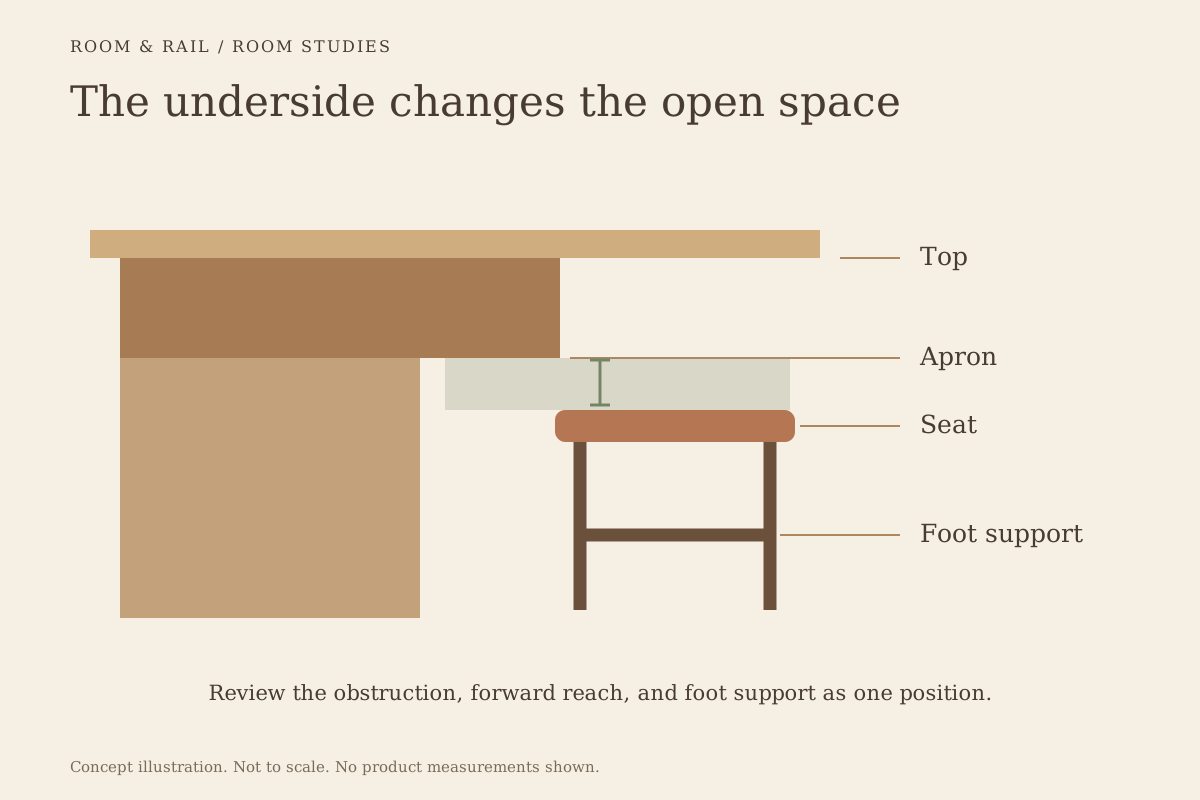
A bar-stool footrest is a small horizontal element with several jobs in the room. It gives the feet a place to rest, becomes a repeated line beneath the seats, and receives contact that the upper frame may never experience. Its position and construction deserve a closer look than a color choice at the end of an order.
Start by separating the foot support from the rest of the stool. Ask where it sits relative to the seat, how wide and deep the contact area is, and which parts are intended to carry load. Then consider wear and serviceability. A decorative finish, protective sleeve, and structural rail are not necessarily the same component.
Open diagram at full size (new tab) ↗
Read foot support in relation to the seat
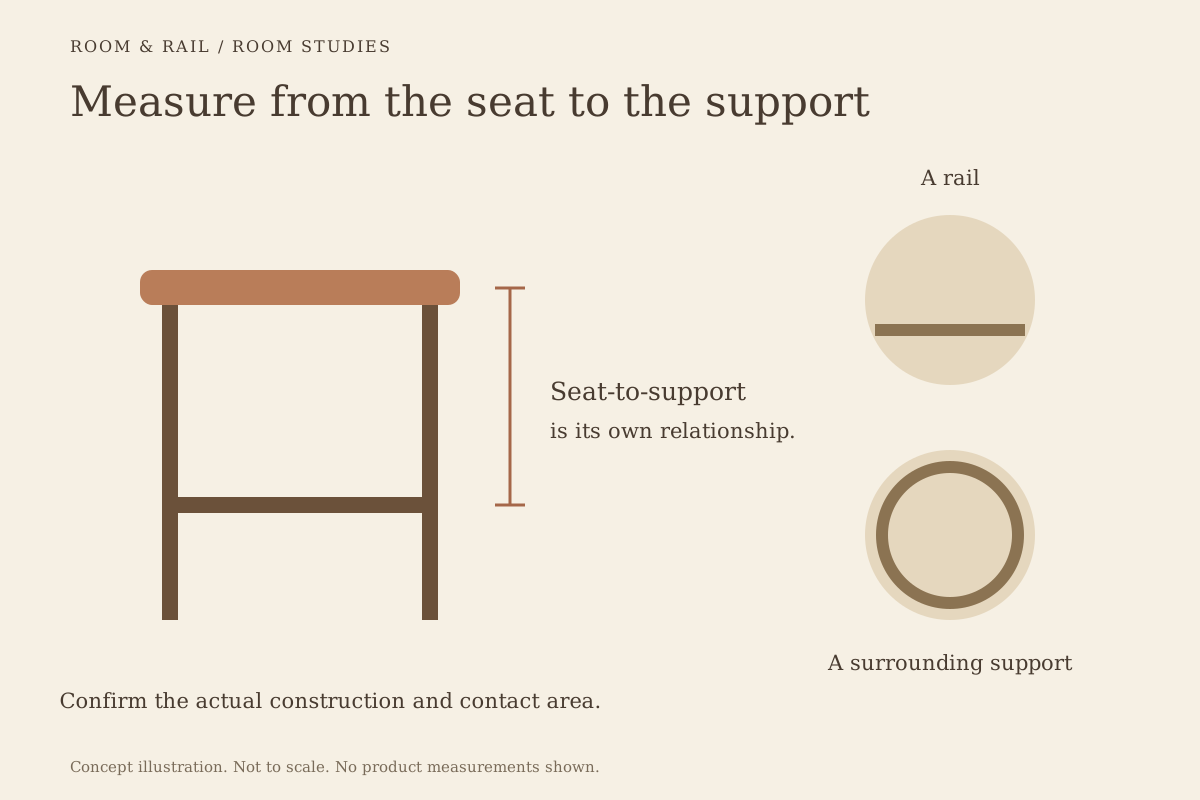
Seat height above the floor and footrest height above the floor describe different measurements. The vertical distance between them helps explain the guest's seated leg position. A stool can meet a nominal counter-height recommendation while placing the foot support in an uncomfortable location for a particular person.
The stool fit guide examines this relationship with seat depth and the counter overhang. Review an actual sample beside the intended surface. The person should be able to describe how the feet meet the support while reaching the table, rather than choosing between two unrelated posture problems.
Do not infer a footrest measurement from an overall product height. The FRU-777-BS backless stool has a published description identifying a fully welded 16-gauge steel frame and 360-degree seat rotation. Those are specific frame and movement facts. Its overall dimensions still do not establish the footrest-to-seat distance, so that measurement remains a separate part of the fit review.
Compare a front rail with support around the base
A straight front rail offers support in a particular orientation. A ring or other surrounding form can present contact in more than one direction, depending on the exact construction. Neither geometry is automatically better; its usefulness depends on how the guest approaches and uses the seat.
With a swiveling seat, identify whether the footrest remains fixed while the seat turns. The swivel-mechanism article separates moving and stationary components. A guest turning toward a companion may encounter a different relationship to the support than when facing the bar.
Also examine where shoes meet the member. A narrow curved tube, broad flat surface, or covered rail can feel and look different. Those observations should be made on the selected model. A generic illustration can explain the question, but it cannot replace the product's actual dimensions or intended use.
Identify what a finish option changes
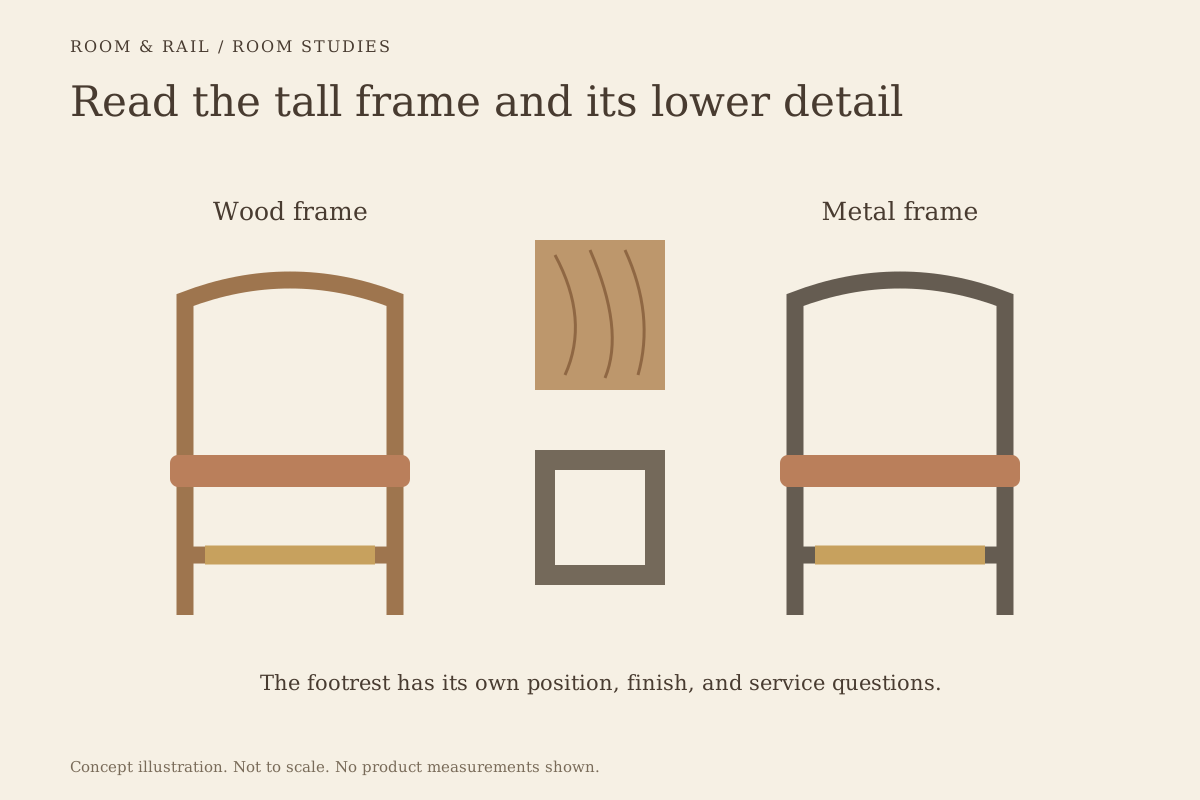
The FRU-US-225-BS stool offers Foot Rest selections named Gold, Black, and Silver. Those labels allow a visual choice within the configuration. They do not, by themselves, prove different alloys, coatings, replaceable parts, or load capacities.
Read the selected option beside the frame and seat. A contrasting footrest can become a fine repeated line across a row, while a related dark tone may let the seat upholstery lead. The chair-and-stool palette guide helps connect that detail to other metal or wood accents in the room.
If the material or coating matters to care, request the exact description. A Gold option is a color reference unless the specification says more. Keep the materials guide beside the selection so the public description does not turn an appearance into an unsupported construction claim.
Distinguish ordinary contact marks from damage
Shoes contact the support differently from hands touching a backrest. Review where wear appears and whether it affects only the surface or also the attachment and shape. A visible scuff, a loose member, and a cracked connection need different responses.
The wear-review article offers a condition-based approach without predicting a universal service life. Describe the location and extent of the change. Do not dismiss movement in an attachment as a cosmetic issue simply because the coating also looks worn.
Follow the manufacturer's inspection and service guidance. A restaurant should not use a damaged rail as a step, bend it back into position, or add a guessed fastener to quiet a rattle. Concerns about structural or attachment condition need the appropriate assessment before the stool returns to ordinary use.
Review cleaning access around the support
The footrest can sit close to legs, stretchers, or a pedestal cover. Those intersections affect how staff reach the surfaces and the floor beneath them. Examine the actual access with the stool in its normal position, including nearby furniture that may restrict movement.
Use cleaning products approved for the selected finish. A treatment used on the floor or bar equipment should not automatically be applied to the stool. Where two materials meet, obtain instructions that account for both rather than assuming the most durable-looking surface sets the rule.
The wood-and-metal stool comparison keeps frame identity separate from coating care. A metal-looking footrest on a wood stool does not make the entire assembly suitable for a cleaner intended for metal fixtures. The surrounding finish remains part of the task.
Ask whether the worn element is serviceable
A protective cover may be replaceable while the rail beneath it remains part of the frame. In another design, the complete support may be a separately supplied component. Confirm the approved part and procedure for the exact stool instead of assuming a visible seam means easy removal.
The swivel repair decision uses the same principle for mechanisms: identify the component and the condition of the surrounding assembly before pricing work. A new surface cover cannot repair a loose structural connection, and a new mechanism cannot repair an unrelated footrest problem.
If a replacement is offered, include its finish reference and any required hardware in the instruction. A close color match may still have the wrong dimensions or attachment. Keep the model and part identity together so a future order does not depend on a photograph alone.
Compare the complete repair cost
Part price is only one component of a maintenance decision. Include approved labor, transport or callout charges where relevant, any minimum quantity, and the effect of taking the stool out of service. Compare that complete scope with replacement furniture rather than comparing a bare component with a delivered stool.
For illustrative arithmetic only, an $18 approved part plus 15 minutes of labor at $40 per hour totals $28 before other charges. Those are hypothetical inputs, not our part prices or a repair estimate. The calculation shows why a small component cost should not be presented as the full cost of the work.
Follow the buying workflow and retain the agreed scope in your purchasing record. If the supplier cannot identify an approved part or the frame condition is uncertain, leave that uncertainty visible. A low theoretical repair price is not useful when the proposed repair is not actually available.
Keep the lower detail in the final furniture review
Save the selected footrest appearance with the exact stool on the finish board, then retain any confirmed dimensions and service instructions in the product record. A sample photograph should show the lower frame as well as the upholstered seat, because the repeated support contributes to the room's composition.
The best footrest decision connects seated fit, construction, cleaning, and later care. It does not need a promise that one finish will never mark or that one shape suits every guest. It needs a clear account of how the selected component works within the complete stool and the real bar setting.