The room journal
Why solid wood table tops move, and what the room has to do with it
Solid wood table tops respond to moisture conditions even after they have become finished furniture. A change in width, a gap, or an uneven surface may have several possible causes, including material movement, mounting, exposure, or damage. Understanding the underlying behavior helps a buyer ask a more precise question about a particular table.
It does not make every crack or distortion an acceptable feature. Treat the observed condition and the product's instructions as the starting evidence. A photograph can locate a concern, but it cannot establish the wood's moisture history, the original assembly, or the cause of a failure by itself.
Open diagram at full size (new tab) ↗
Understand the moisture relationship first
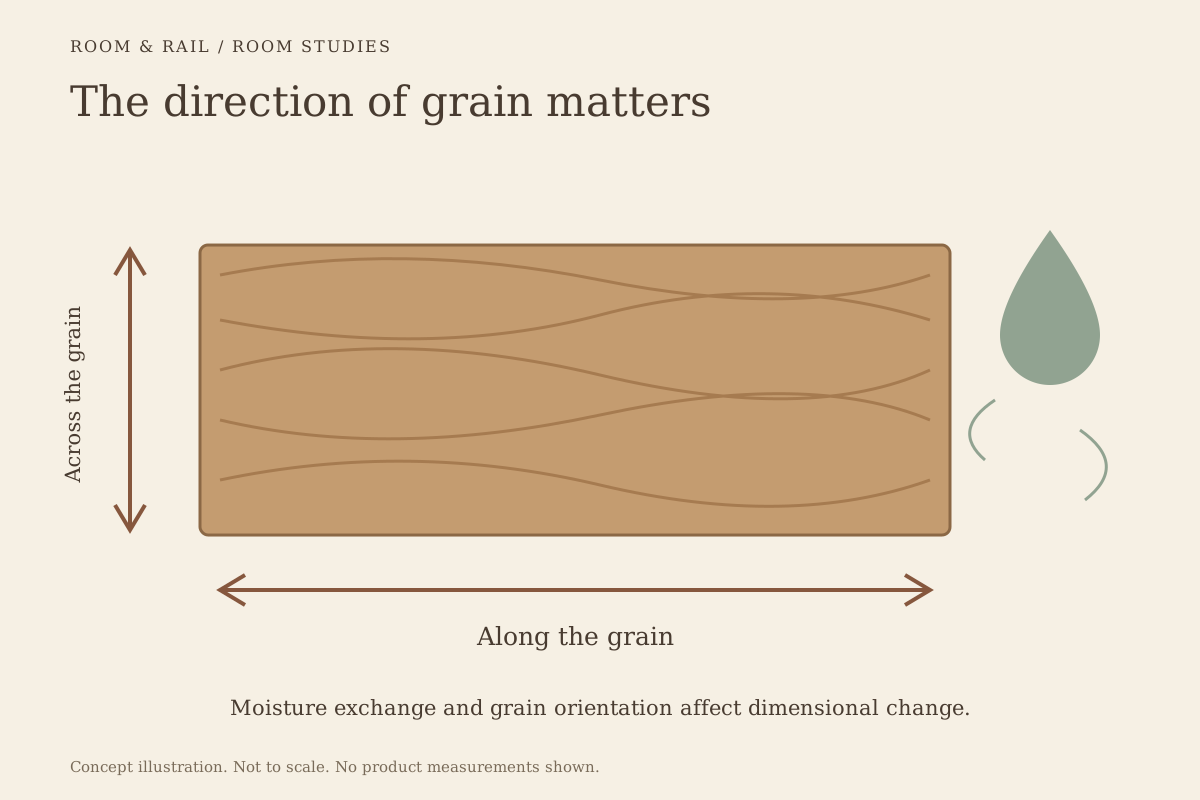
The USDA Forest Products Laboratory explains that wood exchanges moisture with the surrounding air. Below the fiber-saturation region, changes in bound water are associated with shrinkage or swelling. That is different from imagining wood as an inert slab whose dimensions remain unchanged once it leaves the factory.
The same reference describes different movement along and across the grain. In ordinary wood, dimensional change along the grain is much smaller than across it, and the two cross-grain directions can differ. Board orientation and species therefore matter to the behavior of a finished panel.
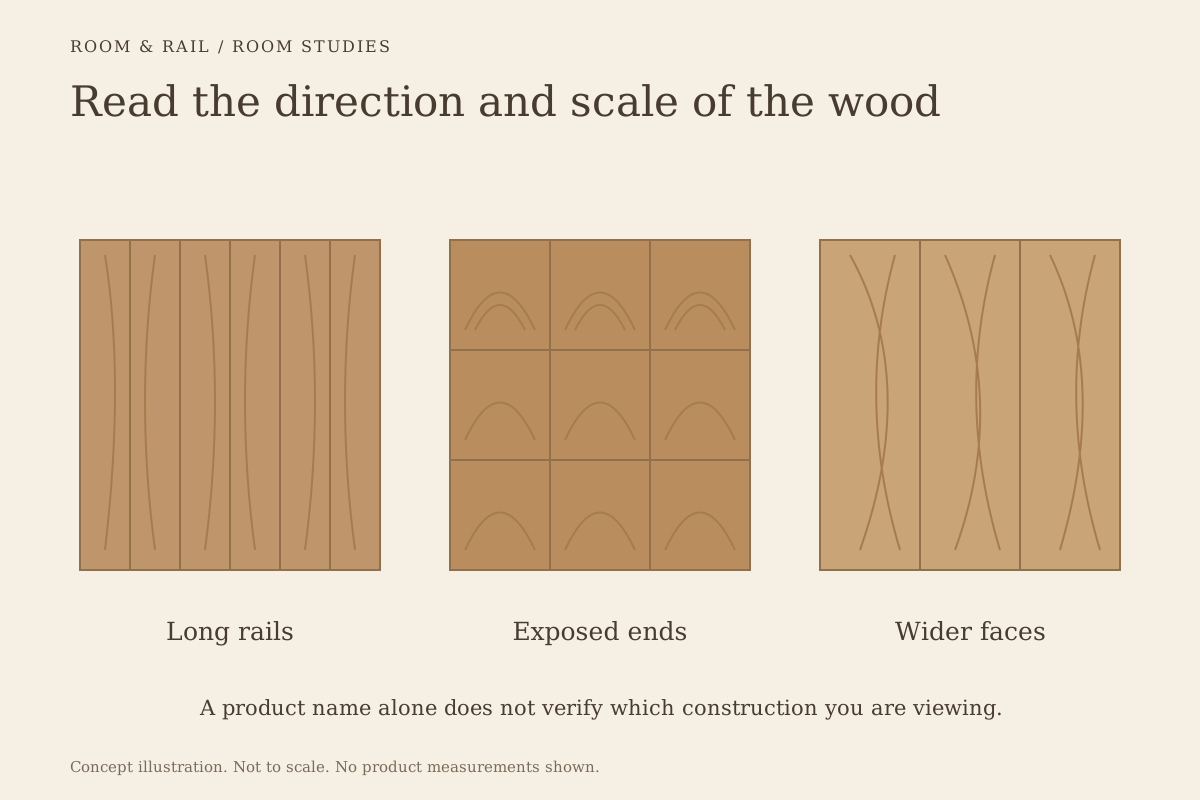
Those principles explain why a tabletop specification needs more than a color and a nominal size. The butcher-block and plank guide considers how pieces are arranged in a surface. A broad plank and a group of narrower rails can present different patterns and construction questions even when both are solid wood.
Follow the grain across the actual top
Look at the direction of the boards and how the top is assembled. A long rectangular top may have grain running along its length, so the major cross-grain dimension is its width. The visible edge and underside can help identify the arrangement, but the manufacturer's construction information is the stronger reference.
The FRU-ERAT-ELM top is listed as solid wood for indoor use with a 1 1/8-inch thickness. Its offered sizes range from small square forms to longer rectangles. Those facts do not provide a movement allowance or prove that every size uses identical internal details.
The FRU-SW-BB top is also listed as solid wood for indoor use, with a 1 1/2-inch thickness and several shapes. Its butcher-block name should not be used to infer a particular end-grain construction without confirmation. The actual board arrangement remains part of the product description to review.
Distinguish a gap from a split and an uneven surface
A visible line can be a joint between pieces, an opening at a joint, a crack within a piece, or a finish feature. Describe where it occurs and how it relates to the grain and assembly. Calling every line a split can be as misleading as dismissing every opening as natural variation.
An uneven top raises another question. Determine whether the surface itself has changed or whether the complete table moves because of its base or mounting. The table-wobble guide separates floor contact, assembly movement, and top condition so one problem is not mistaken for another.
Avoid diagnosing from appearance alone when the concern affects use. The supplier or qualified reviewer may need the product identity, underside details, location, and history to assess it. The aim is to describe the actual change clearly enough that the next review can distinguish the possibilities.
Examine what the mounting permits
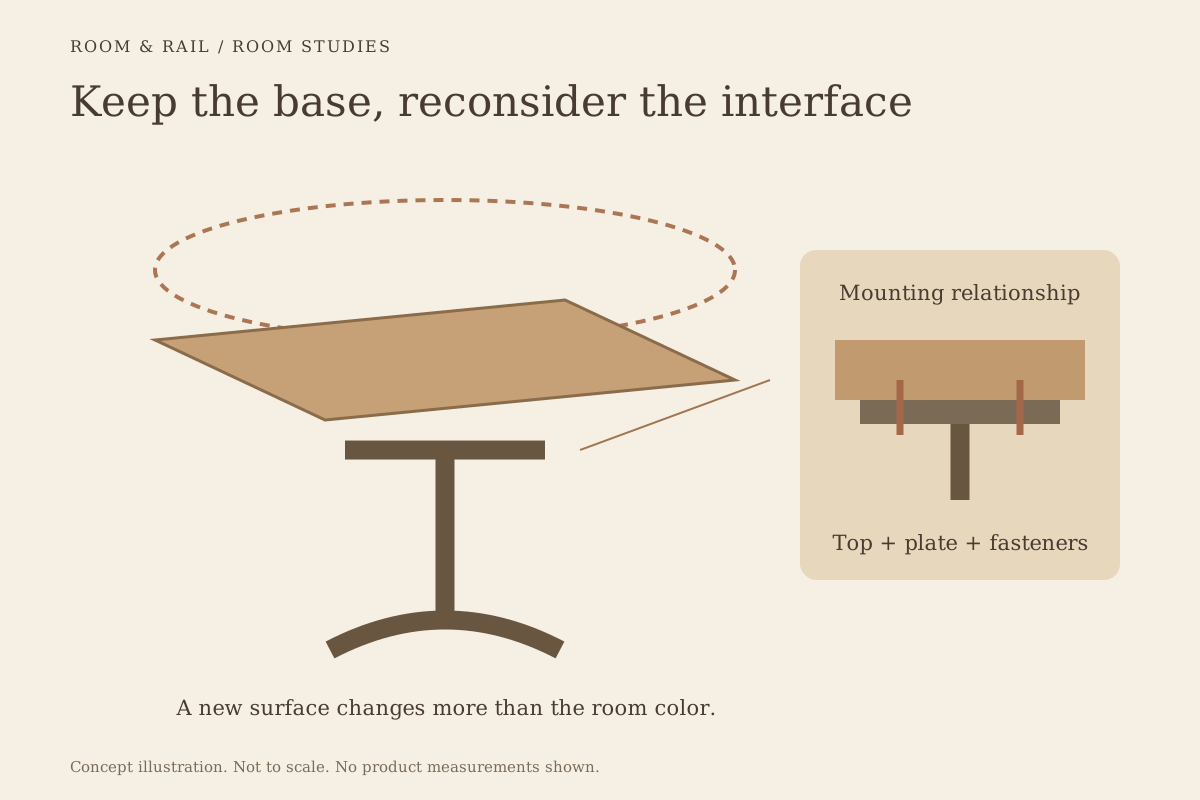
The top is connected to a supporting assembly, and that connection must suit its construction. A mounting method that restrains movement differently from the intended design can become part of the problem. The correct attachment and any allowances belong to the manufacturer's instructions for the exact pairing.
The table-system guide treats that connection as its own component. Do not substitute a generic screw pattern or add rigid fasteners because a top appears to have moved. An improvised attempt to force the surface flat may create another issue without explaining the original one.
For a replacement top, check the retained base and mounting rather than copying the old holes automatically. A new material, thickness, or board arrangement may need a different approved connection. Similar outside dimensions do not establish identical mounting requirements.
Consider where the table has been stored and used
The room's conditions can change between delivery, installation, and ordinary service. An unfinished building, temporary storage space, or location close to a strong heat source may expose the furniture differently from its intended dining environment. Identify those circumstances when reviewing a change.
Do not invent a universal humidity target or acclimation period from a general article. The selected product's guidance should state the conditions and sequence it requires. If the instructions are unclear, resolve them before storing a large order in a space chosen only because it is available.
The buying guide can include storage and receiving in the project plan. The condition of the room matters before the first guest arrives. A delivery date is not automatically the same as readiness to install and use the furniture.
Keep water exposure and finish care specific
A protective finish does not turn every wood top into an outdoor product. The two named examples are listed for indoor use. Review spills, repeated wetting, underside exposure, and cleaning through their actual care instructions instead of assuming a finished surface can remain wet indefinitely.
The cleaning-compatibility guide separates the coating from the wood beneath it. A cleaner or treatment suitable for another wood product may not suit the dining top's finish. Oiling, sanding, or aggressive drying should not be treated as a universal response to a visible change.
The outdoor furniture guide handles exterior-use requirements separately. Moving an indoor wood table to a covered patio still changes the use context. A roof alone does not establish that the product is approved for the conditions there.
Preserve the design relationship while resolving the concern
Wood grain and tone often provide a major part of the room's character. A replacement or approved repair may change the appearance of one top relative to the others. The finish-sample review can compare the proposed result without promising an exact match to an aged surface.
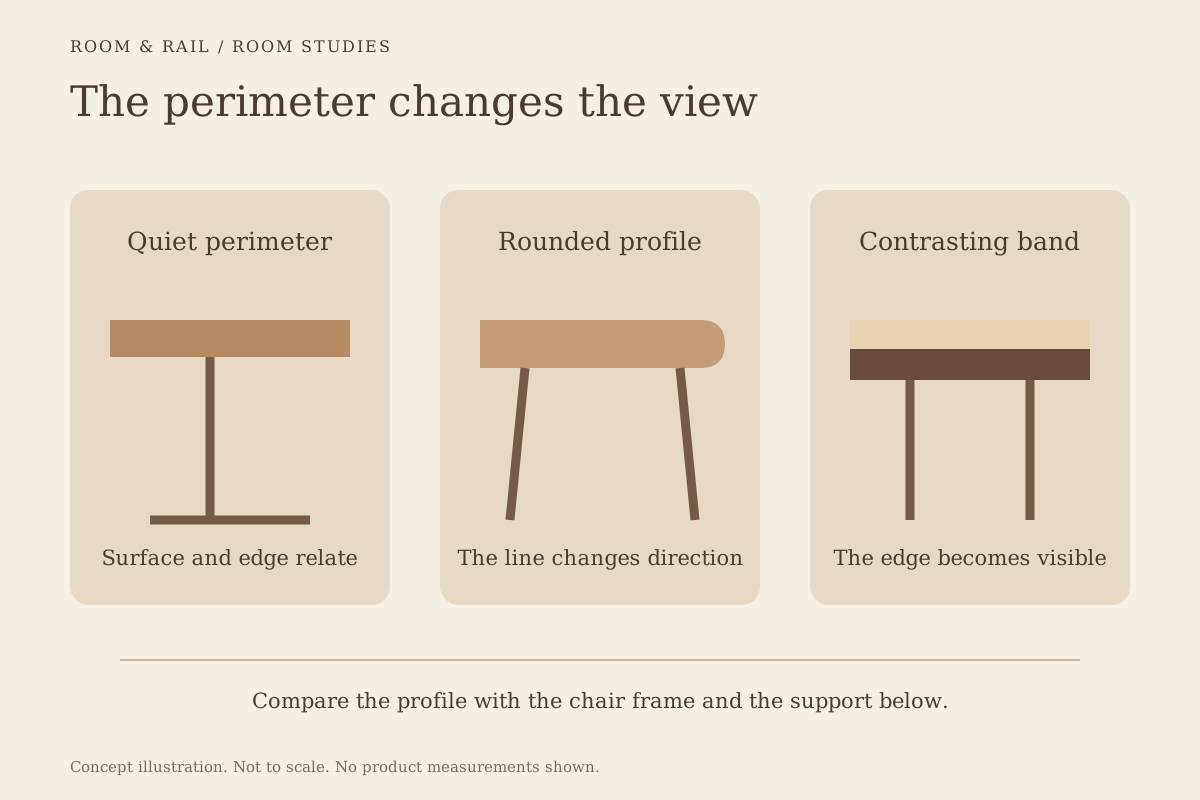
The table-edge study is also useful where a repair or replacement changes the perimeter. A thicker edge, new coating, or different board pattern can alter how the table reads beside its chairs even if the main color stays close.
Keep the affected table identifiable on the finish board, with the condition review and approved work documented separately. The visual reference should not hide that a different top or finish was supplied during service.
Use the material explanation to sharpen the next decision
Wood movement is a reason to choose the right construction, mounting, room conditions, and care. It is not a blanket excuse for damage or a diagnosis that can be applied to every visible gap. The actual product and observed change still need to be assessed together.
A precise review leaves the restaurant with a clearer distinction between expected material behavior, an installation question, and a condition requiring service. That distinction supports a better repair or replacement decision while preserving the reason solid wood was chosen for the room in the first place.